
Why Entrepreneurs Fail
Redefining What Entrepreneurial Failure Truly Means
Discover why most entrepreneurs fail not because of market conditions but because of internal collapse, and how redefining failure can transform your journey.

Beyond Business Failure: The True Reasons Entrepreneurs Struggle
Discover why most entrepreneurs don't fail because of market conditions or competition but because of internal factors rarely discussed in startup circles.
Why I Had to Write This Chapter
“What if it’s not over?”
I asked myself this question while facing what seemed like the end of my startup journey. Our acquisition had fallen through, our board was ready to shut down the company, and we had just weeks of runway left.
The traditional narrative would say my startup failed because of market timing, competition, or insufficient funding. But I knew something deeper was happening—rarely discussed in entrepreneurship circles.
The greatest threat wasn’t external market forces but my internal collapse. I had confused my startup’s potential failure with my personal failure. This mindset trap has paralyzed any market condition ever could.
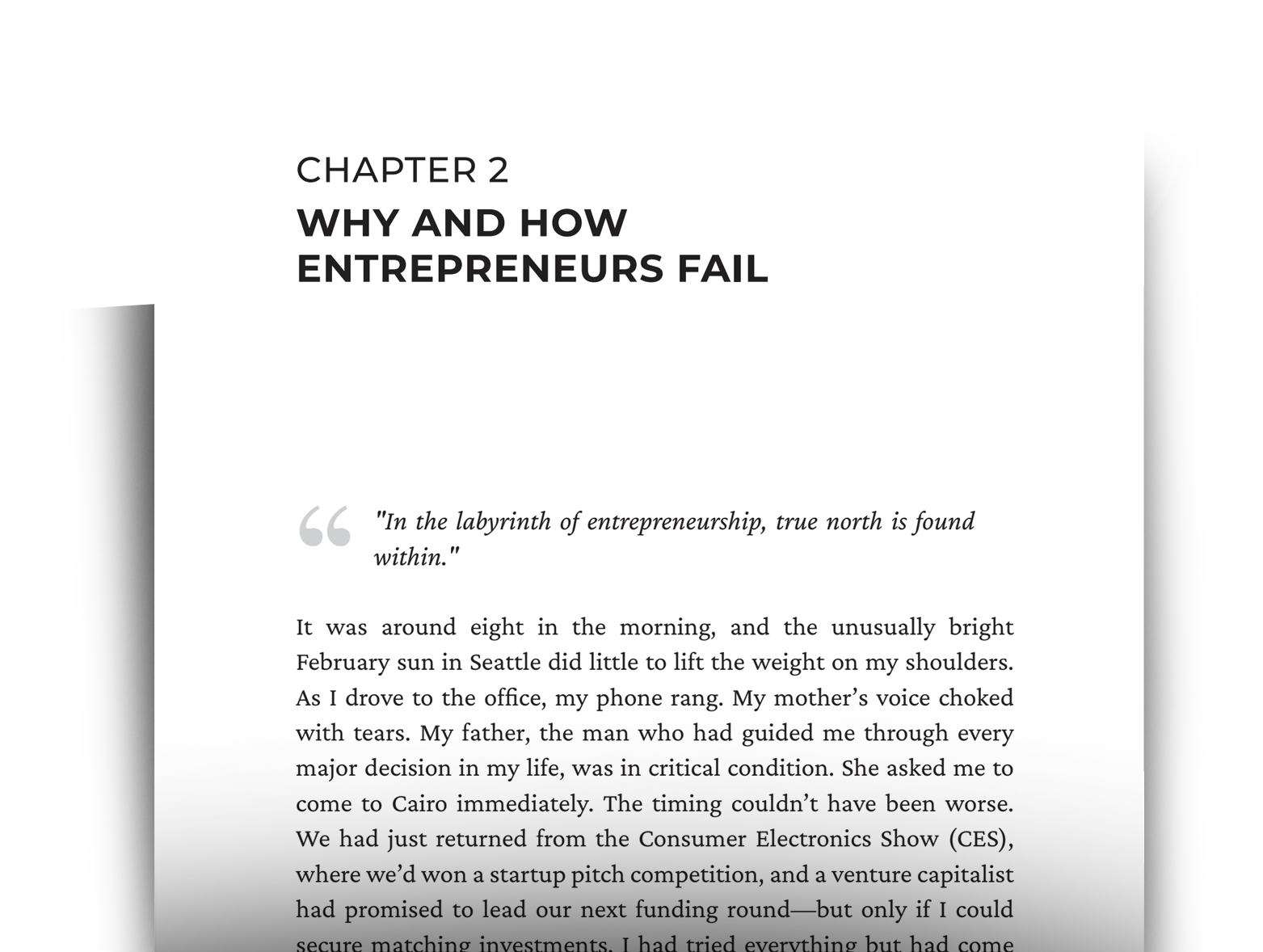
This realization became the foundation for Chapter 2. I needed to redefine what entrepreneurial failure truly means—not just for myself but for every founder caught in the same dangerous misconception.
“Learning to separate business outcomes from personal identity saved both my startup and my sense of self.”]

The Failure Misconception That Destroys Entrepreneurs
The statistics about startup failure rates are cited endlessly 90% of startups fail, 70% fail within the first five years, and so on. These numbers create an ominous backdrop for every entrepreneurial journey.
But these statistics hide a more important truth: most entrepreneurs don’t truly fail because their business model didn’t work. They fail because:
They lose sight of their North Star while chasing short-term metrics
They confuse their identity with their startup's outcomes
They overlook building mental resilience in favor of business tactics
They neglect the personal support systems necessary for the journey
I’ve watched brilliant entrepreneurs with viable businesses throw in the towel—not because their market disappeared but because they reached a breaking point internally that made continuing impossible.
Are You Headed Toward True Failure?
Consider these questions honestly:
Do you feel your self-worth fluctuating based on your startup's daily
performance?
Have you lost connection with who you were before becoming a founder?
Do you find it difficult to envision your life if this venture doesn't succeed?
Would you feel like a failure if your startup closed tomorrow?
Have you neglected relationships and activities that once energized you?
If you answered “yes” to most of these questions, you may be confusing business outcomes with personal identity—one of the most dangerous traps in entrepreneurship.
Redefining Success and Failure
When entrepreneurs shift their perspective on what truly constitutes failure, everything changes.
True failure isn’t a startup that doesn’t reach its market projections. True failurItyourself in the process. It’s sacrificing your health, relationships, and core values on the altar of business outcomes.
I’ve seen founders who, by conventional metrics, “failed” when their startups closed—yet they emerged stronger, wiser, and better equipped for their next venture. Conversely, I’ve watched “successful” founders achieve their business goals while becoming shells of themselves.
One founder I worked with saw his first startup implode after three years of work. Yet because he maintained perspective throughout the process, he emerged with his mental resilience, key relationships, and sense of purpose intact. He launched his second venture six months later with more profound wisdom and firmer foundations. That company recently crossed $10 million in revenue.The difference wasn’t business strategy—it was his relationship with failure.
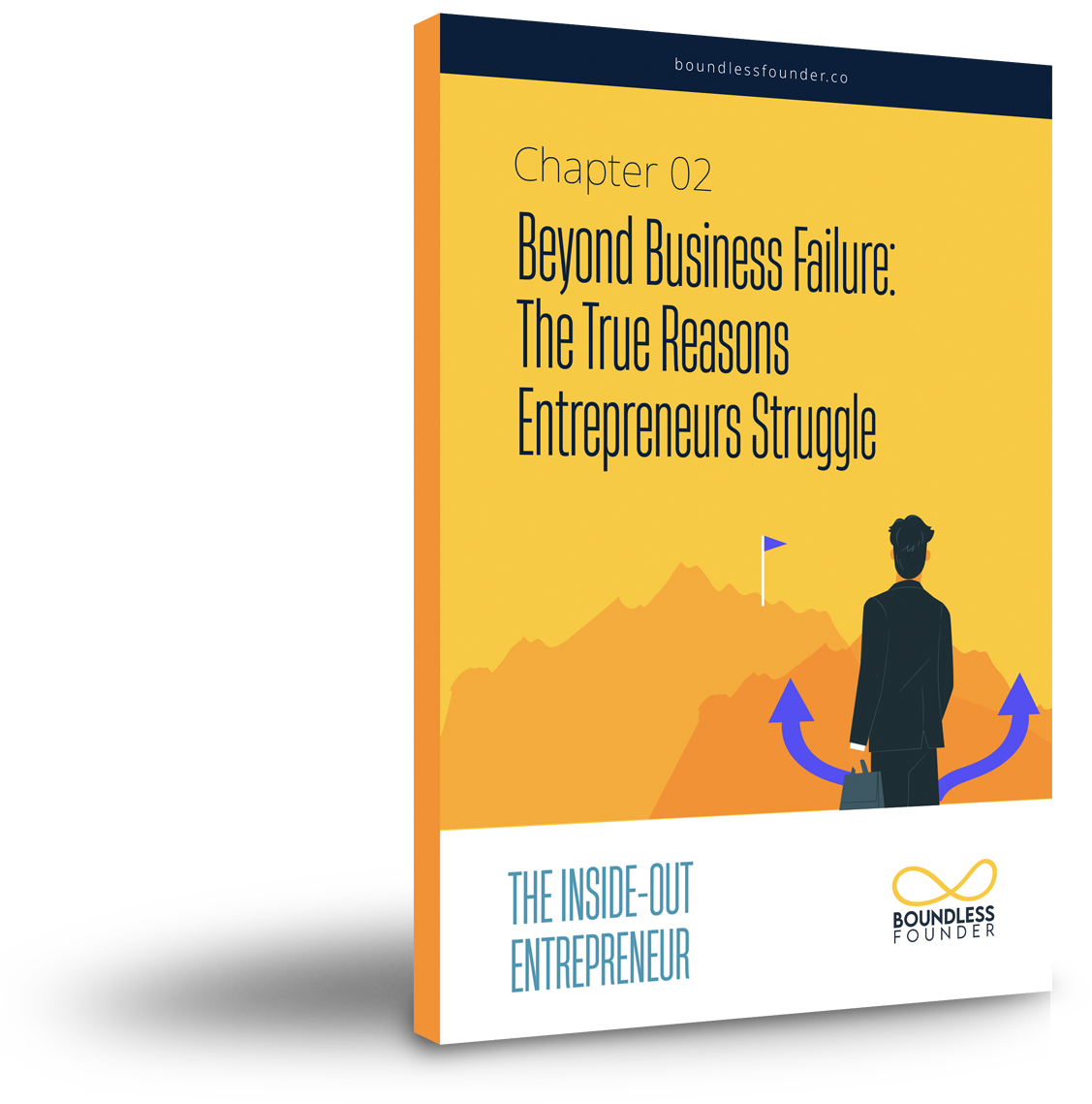
Inside Chapter 2: Redefining Entrepreneurial Failure
In this crucial chapter of The Inside-Out Entrepreneur, you’ll discover:
The four traps that cause entrepreneurs to lose their way
How to separate your identity from your startup's outcomes
Why the marathon mindset trumps the sprint approach
How to maintain your vision during day-to-day challenges
The balance between business goals and life beyond your startup
This chapter fundamentally reframes how you think about success and failure, creating space for sustainable growth regardless of your venture’s immediate outcomes.
Your Relationship
With Failure
How might redefining failure transform your entrepreneurial journey?
Imagine approaching setbacks with curiosity instead of devastation. Picture making bold decisions from a place of security rather than fear. Consider how your leadership might change if you no longer equated business challenges with personal inadequacy.
The perspective shift in Chapter 2 isn’t just about feeling better when things go wrong—it’s about creating the mental space needed to navigate challenges with wisdom instead of fear.
What would change in your daily experience if you truly separated your self-worth from your business metrics?