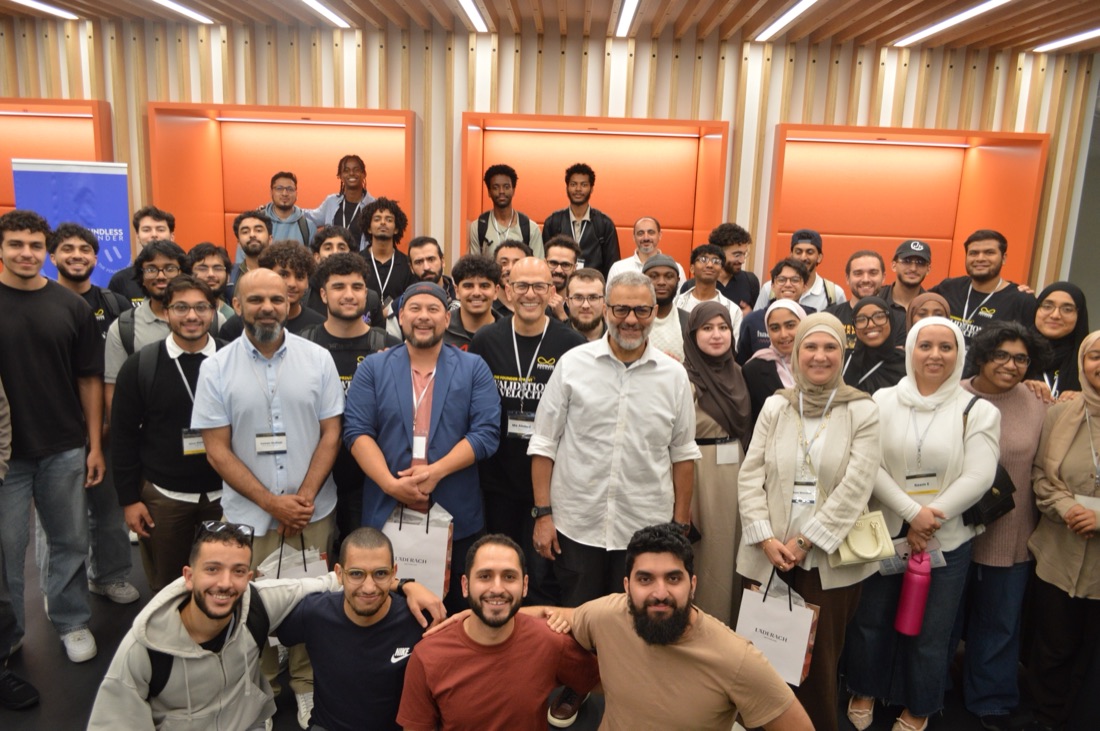
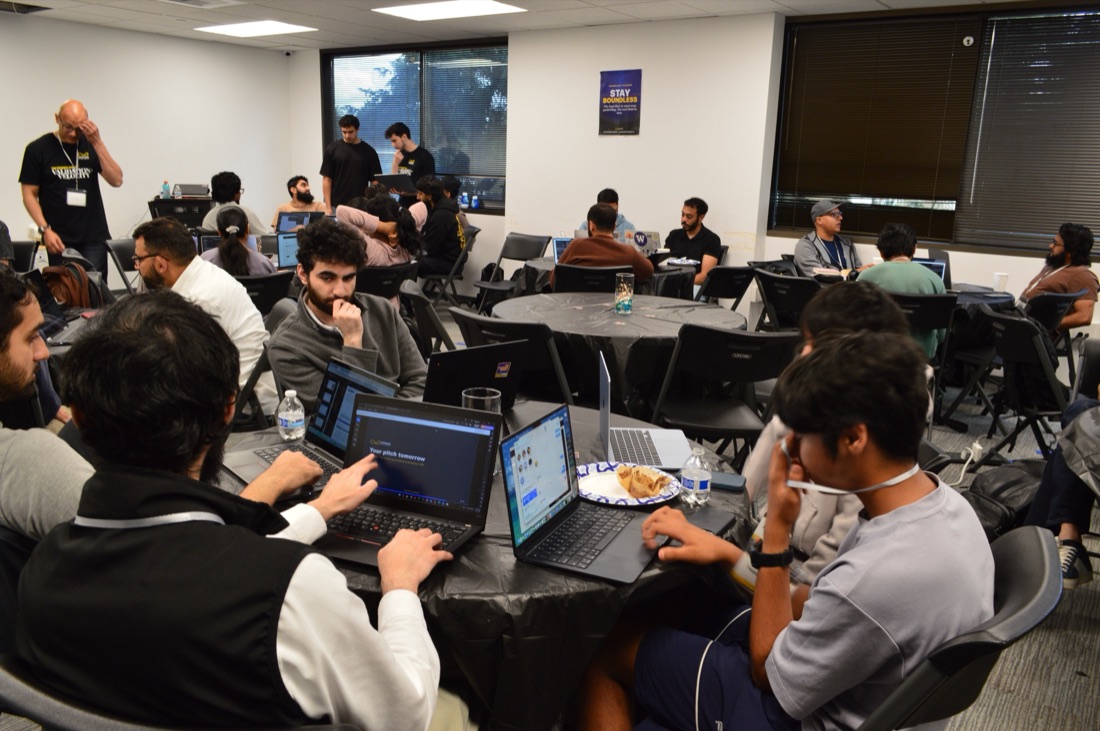
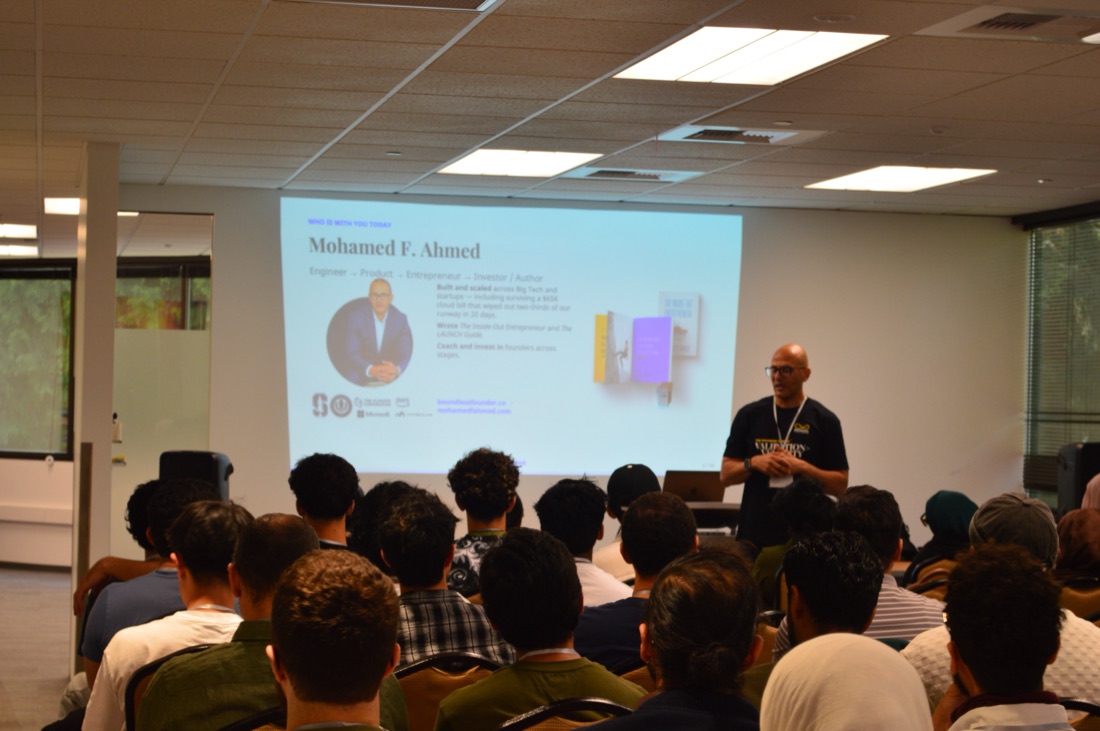
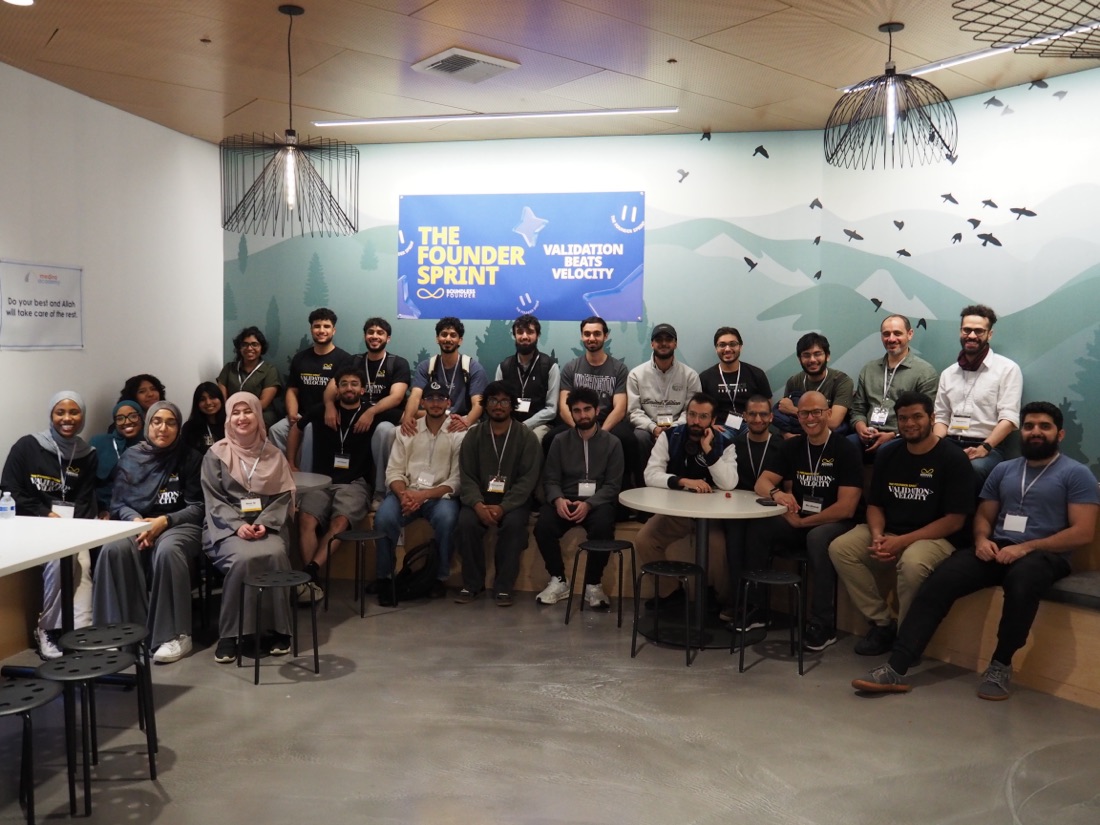
The first Founder Sprint: 48 hours, 100 hand-picked builders, one validation methodology.
Held July 11–12, 2026 · Bellevue, WA · Seattle eastside
The first Founder Sprint brought 100 hand-picked builders to Bellevue for 48 hours. Not to ship the most features in a weekend — to find the strongest evidence that their idea actually matters to real people.
Teams left with a working prototype, real signal from the market, and a business thesis they could actually defend. Here is how it went.
48
HRS
Of building
100
BUILDERS
Hand-picked
2
DAYS
July 11–12
$23K+
PRIZES
Cash + credits
The weekend
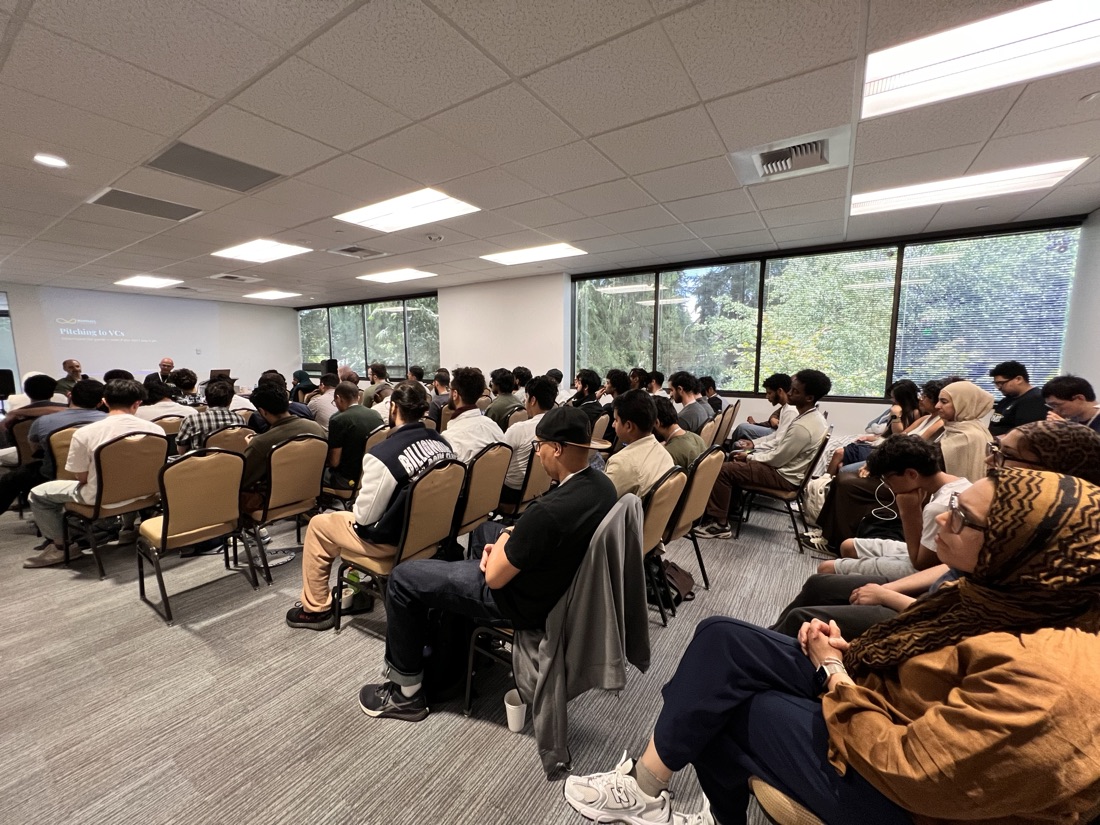
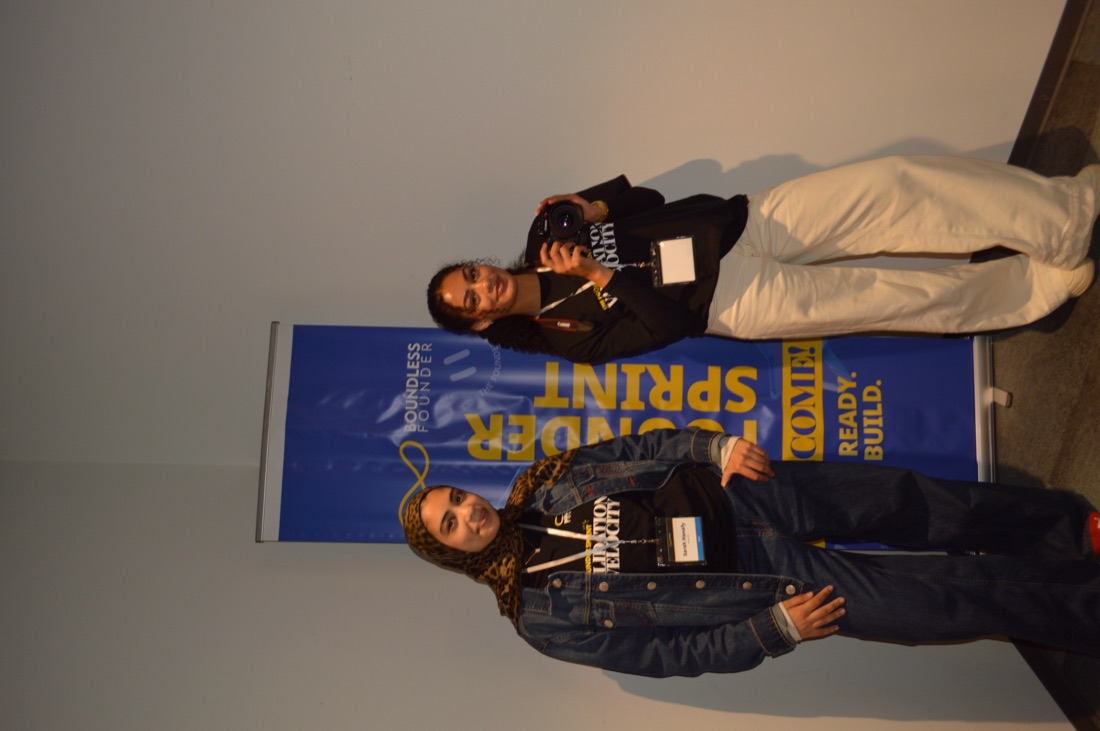
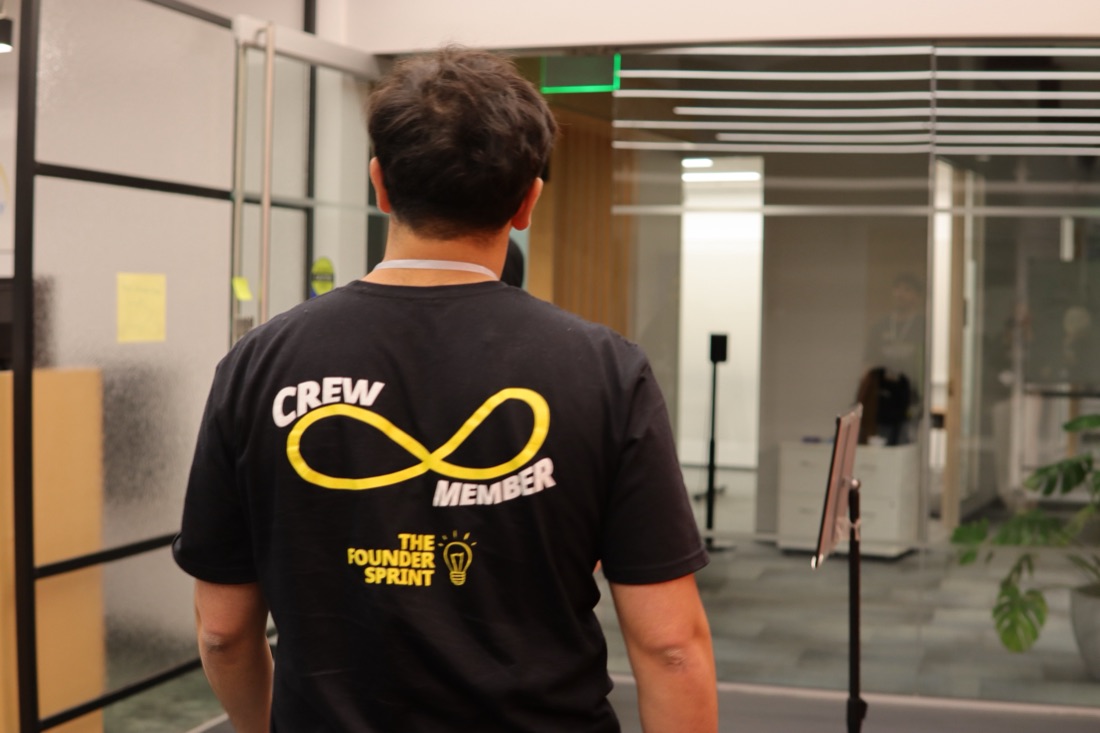
Moments from the room
The data
Launch Day, by the numbers
Forty-eight hours, measured. The honest story of what twenty-five teams built — and where the signal
actually was.
From application to demo
118 builders applied. 50 stood on stage with something they'd shipped.
Applied 118
Accepted 100
Checked in 59
Shipped 50 25 teams · 50 builders
Who showed up
100 accepted builders — students, operators, and career-switchers.
Student51
Working professional31
Recent grad11
Other7
~36%came from a non-CS domain
60/100arrived seeking an idea — and most formed teams on-site
46% → 32%solo share fell 14 points as builders paired up
What they built
25 teams, by sector.
Vertical AI agent7
Education3
Work & Productivity3
Hiring & Careers3
Consumer & Family3
Deep tech / Climate2
Developer tools2
Health & Social1
PropTech1
18 of 25 teams built an AI agent to automate one specific job.
The scorecard
Building beat validating by 0.75 of a point
Field average, out of 5. The three build dimensions (purple) all out-scored the three
validation dimensions (amber).
Build & tell avg 3.12
The Pitch3.28
Problem & Customer3.19
AI-Native Build2.89
Validate ⭐avg 2.37
Evidence2.48
Willingness to Pay2.40
Distribution2.22
0.75point gap between building (3.12) and validating
(2.37) — “Validation > Velocity,” measured.
Cohort average across all 25 teams (0–5 per axis).
Everyone did the math. Few made the call.
Out of 25 decks.
Showed a dollar figure21of 25
Showed a market-size (TAM) slide15of 25
Cited a real customer conversation6of 25
Market-sizing was easier to reach for than customer evidence — only 6 of 25 teams cited a
real conversation.
The riskiest assumption on the table
Each team's make-or-break bet — how many made it, and how they scored (avg /30).
Behavior / adoption11 teamsavg 15.9/30
Willingness to pay6 teamsavg 17.2/30
Data / trust access4 teamsavg 15.5/30
Technical feasibility3 teamsavg 17.8/30
Defensibility1 teamavg 17.0/30
The most common bet — betting on behavior change — was the weakest-scoring.
The verdict
Who won the room
🏆 Winner · highest judge score
Soglia22.8 / 30
AI that wins grant funding for small charities on a 5% success fee — the only team above 3.0 on all three validation dimensions.
❤️Crowd FavoritePause AI
🎯Boldest BetKhan · AI desalination
🎤Best PitchSoglia
🃏WildcardKhan
Signal over speed
Anyone can build an app in a weekend now — AI ships code in hours. The hard part was never the code; it was knowing whether anyone wanted what you built. So the Sprint rewarded evidence, not feature count: teams spent the weekend talking to real people, running real experiments, and following the signal.
A room full of people trying to do the same thing
Builders worked alongside operators, founders, and investors who had actually shipped. Mentors pressure-tested assumptions in real time, and the judging panel scored on the strength of the evidence and the clarity of the thesis — not the polish of the demo.
Credit where it's due
Judges & mentors
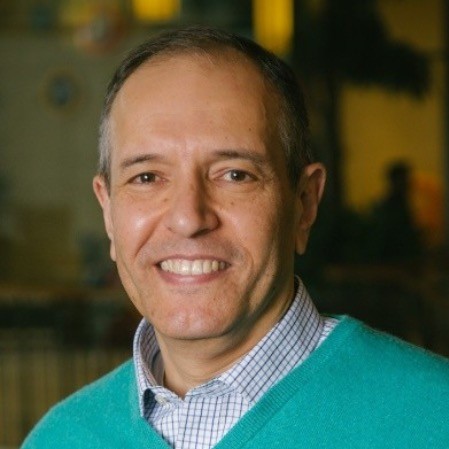
Taimur Rashid
Managing Director, Generative AI Innovation Center · AWS